
Essence Fest 2025: Director Traci A. Curry talks Hurricane Katrina: Race Against Time
Premiering July 27 at 10/9c, and streaming the next day on Disney+ and Hulu is Nat Geo's gripping new docuseries, Hurricane Katrina: Race Against Time.
From the Multiple Award-Winning Producers at Lightbox, Ryan Coogler and His Production Company Proximity Media, and directed by Traci A. Curry, the Five-Part Series Premieres Across Two Nights Beginning July 27 at 8/7c on National Geographic; All Episodes Stream July 28 on Disney+ and Hulu.
Told in unflinching, moment-by-moment detail, HURRICANE KATRINA: RACE AGAINST TIME transports viewers into the chaos that engulfed New Orleans as one of the deadliest catastrophes in U.S. history unfolded—capturing the fear, heroism and resilience of those who fought to survive the storm and its aftermath. With the clear-eyed perspective of two decades of hindsight, this gripping historical record corrects persistent false narratives and exposes how a natural disaster became a national tragedy. Grounded in gut-wrenching eyewitness testimony from survivors, first responders and officials, and brought to life with immersive archival footage, the series is an unparalleled, emotionally raw examination of the storm’s personal, political and societal fallout.
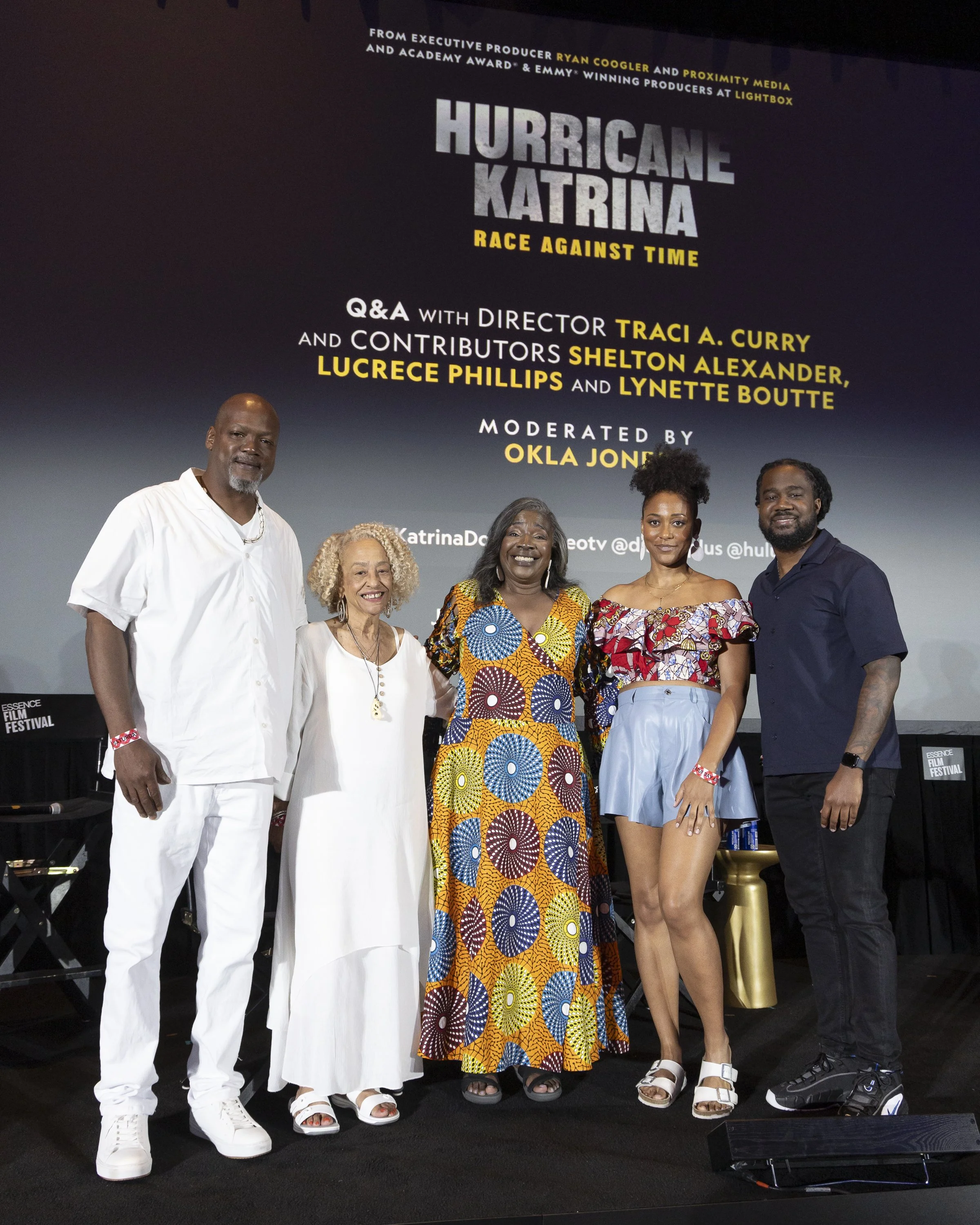
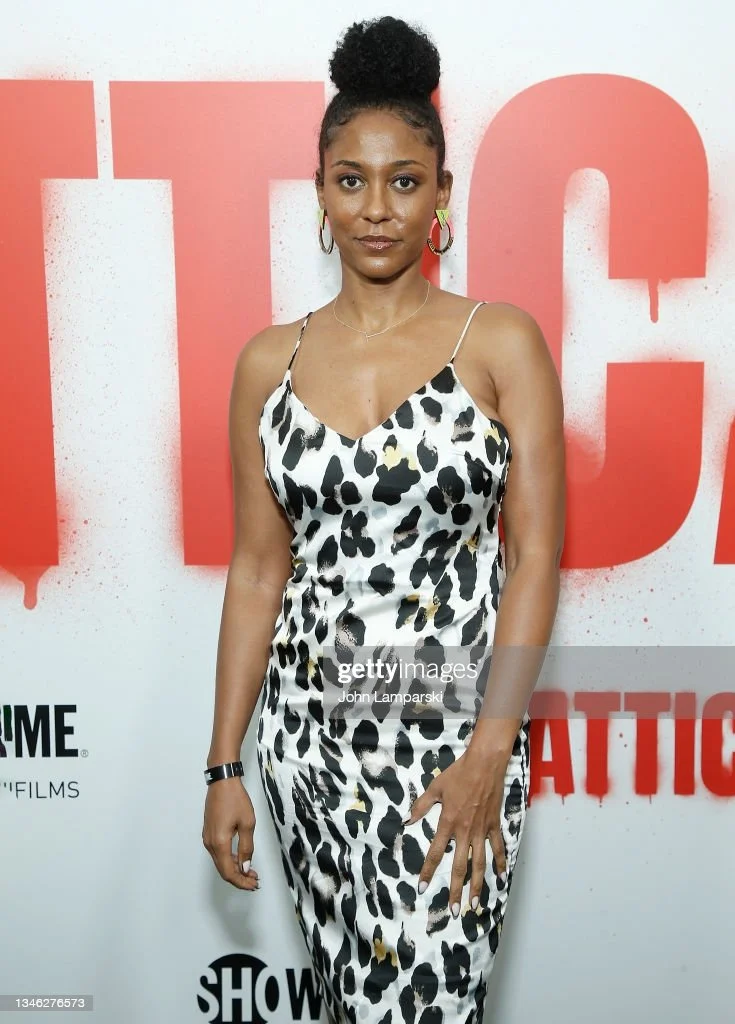
At the helm of the series is Oscar-nominated director Traci A. Curry (“Attica”). Through Curry’s commitment to bold, empowering narratives, the series unfolds directly from the residents, first responders, and officials who were in New Orleans during the disaster. Each episode is immersed in their lived experiences and their voices present a captivating and powerful retelling and a necessary correction to persistent false narratives. The partnership between Curry and the teams at Proximity Media and Lightbox signals a shift in how this story is told, centered on survivors’ voices, grounded in accountability, and focused on the enduring lessons of a tragedy.
Stanley Nelson, Curry co-directed and served as producer for “Attica,” a Showtime documentary which received an Academy Award nomination for Best Documentary Feature in 2022 and premiered opening night at the 2021 Toronto International Film Festival.
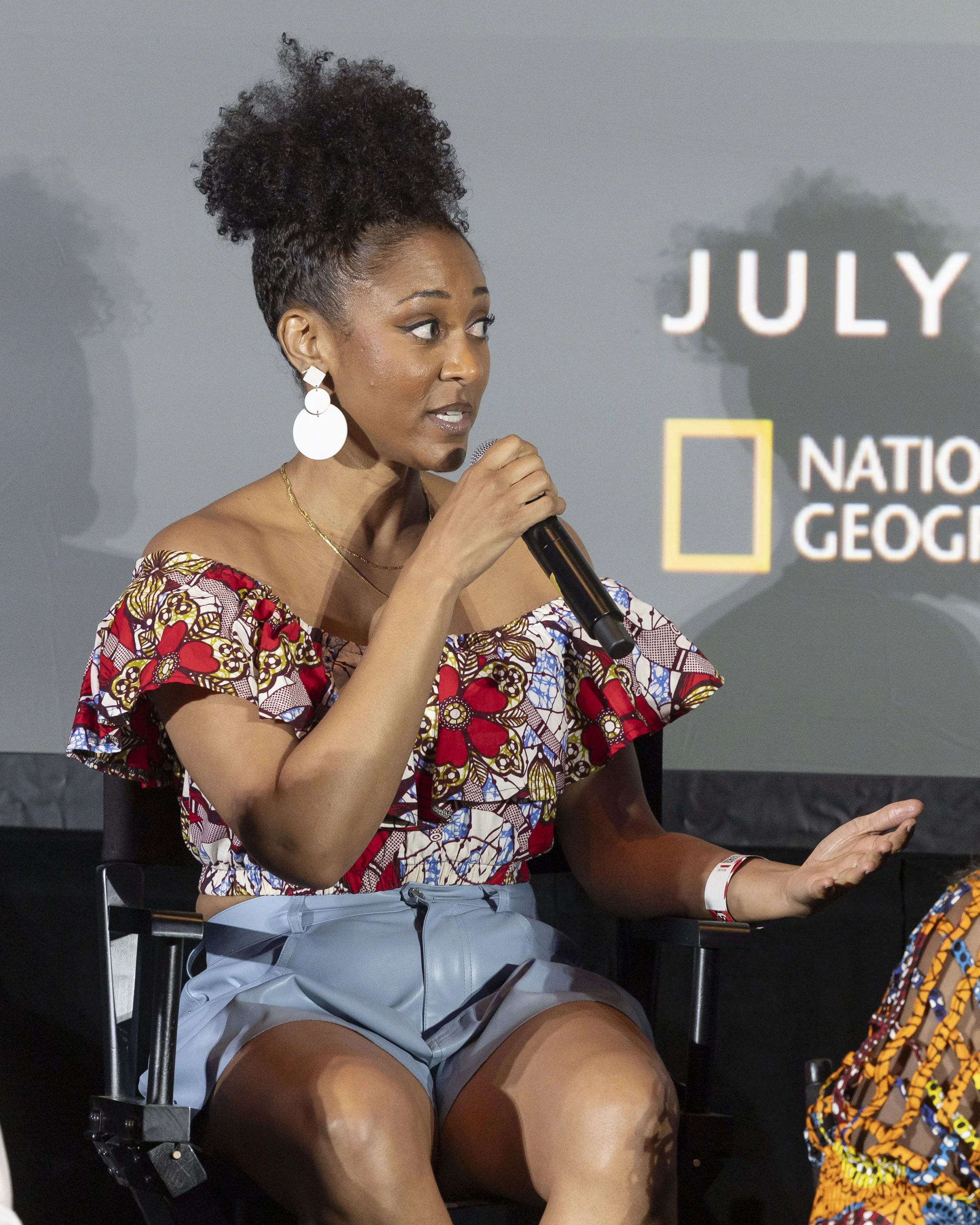
During the Essence Festival of Culture (@neworleansandco), Blackfilmandtv.com spoke with Curri on the making of the project.
How did you get involved with the project?
Traci A. Curry: That is a good question. I, National Geographic, and also the production company, we all have the same representation. And so, there was a project that was out there, and the project needed a director. And I'm a director, and this is very much in my wheelhouse, and the kind of story that I enjoy telling. And so, I met with the National Geographic team, I met with the team at Lightbox, I met with the team at Proximity. It was just a great synergy of storytellers that were all very deeply interested in telling the story. That's how I came on board.
Was the material already set when you came on board, or was the idea out there, and you put it together in terms of how you wanted to shoot it?
Traci A. Curry: The intention at the beginning was Hurricane Katrina 20 years later, that was it. And how we told it was kind of up to me. So, I sort of had to kind of craft a vision about how we were going to approach the story. Because this is a massive, sprawling story that has many moving parts that can be told in a lot of different ways. And what's interesting is that premiering it here at Essence Festival was kind of a full circle moment for me. Because I was here two years ago on a panel for a previous series, knowing that I was about to start on this. I was like, well since I'm in New Orleans, let me just talk to some New Orleanians, to get their insight about this. I just kind of started talking to like people that I met, like employees here at the convention center. I talked to my Uber driver, I talked to the person, all of whom were from New Orleans. And I said, listen, I have the opportunity to direct this series, it's about Katrina 20 years later.
What do you guys think is important for people to know? What was interesting to me was that all of them, people that don't know each other, they all said the same thing. Which was that, you guys who are not from here, you come to Essence Festival, you come to Mardi Gras, you come to Jazz Fest, you enjoy the city. And to you all, New Orleans feels the same, right? It's the same New Orleans that we've always kind of known. But for us, who are from here, New Orleans is not the same. For us, who are from here, we talk about this city as before Katrina and after Katrina. And so, for me, that kind of turned a light bulb on.
Because I understood that there are some things that people who live here understand about what Katrina meant, that the rest of us don't know. I think there's a tendency for those of us who experienced it at Essence, or yours, or kind of Washington, D.C., to remember it as something that happened to America. It wasn't something that happened to America, it was something that happened to New Orleans.
To the people that live in this city. So that understanding that I really first started to get here really informed our approach to the series, which was to say, make the people who are from here the experts of their own experience, and allow their voices to be the ones that tell the story about what happened. It's been 20 years, and I'm sure there have been a number of documentaries centering about this, series and so forth.
Did any of that come to mind when you were putting this together, so that people who have seen their share of documentaries and movies or whatever, don't say, I've seen this already, what am I getting that's new?
Traci A. Curry: Yes. That was definitely the forefront of my mind, right? And I think one of the things that comes across very clearly in our first episode is that obviously everybody knows the various failures that were associated with Katrina, right? There was a failure of all of these institutions and systems, there was a failure of the levees. I think what was less apparent at the time is this is also an environmental justice story, right? There are these layers that we peel back in the series, and one of the things that came very apparent to me when we first started thinking about how to tell the story is that yes, the levees broke and exposed the city to the flood that came in, but before the levees broke, there had been a natural barrier that protected New Orleans and the Louisiana coast from the full front of hurricanes, which is to say the wetlands and the coastal lands that existed right off of the coast of the land in the Gulf of Mexico.
And decades before Katrina ever came here, that land had been disappearing. I think the statistic is something like a football field every hour of that land had been disappearing for decades, and that was because of man-made impacts on the environment. That was because of the dredging of the oil and gas industry that destroyed that land, right?
You have this big environmental impact driven by climate change that impacts an infrastructure that's not prepared to deal with it, and the result is that the people who are the most vulnerable on the front end are the least likely to recover on the back end of the story, right? And for me, that was a new revelation and also one that I think is very instructive about where we find ourselves today. Because the other thing that becomes clear 20 years later and that we make clear in our series is that while Katrina was an extraordinary event, it was not singular in the sense of the way that these stories have continued to play out, right? You have extreme weather events driven by man-made impacts on the environment, comes up against infrastructure that fails because it wasn't designed, and the people who experience the most harm and are the least able to recover are the people who are most vulnerable on the front end of the story.