Film Review: Ray Gunn
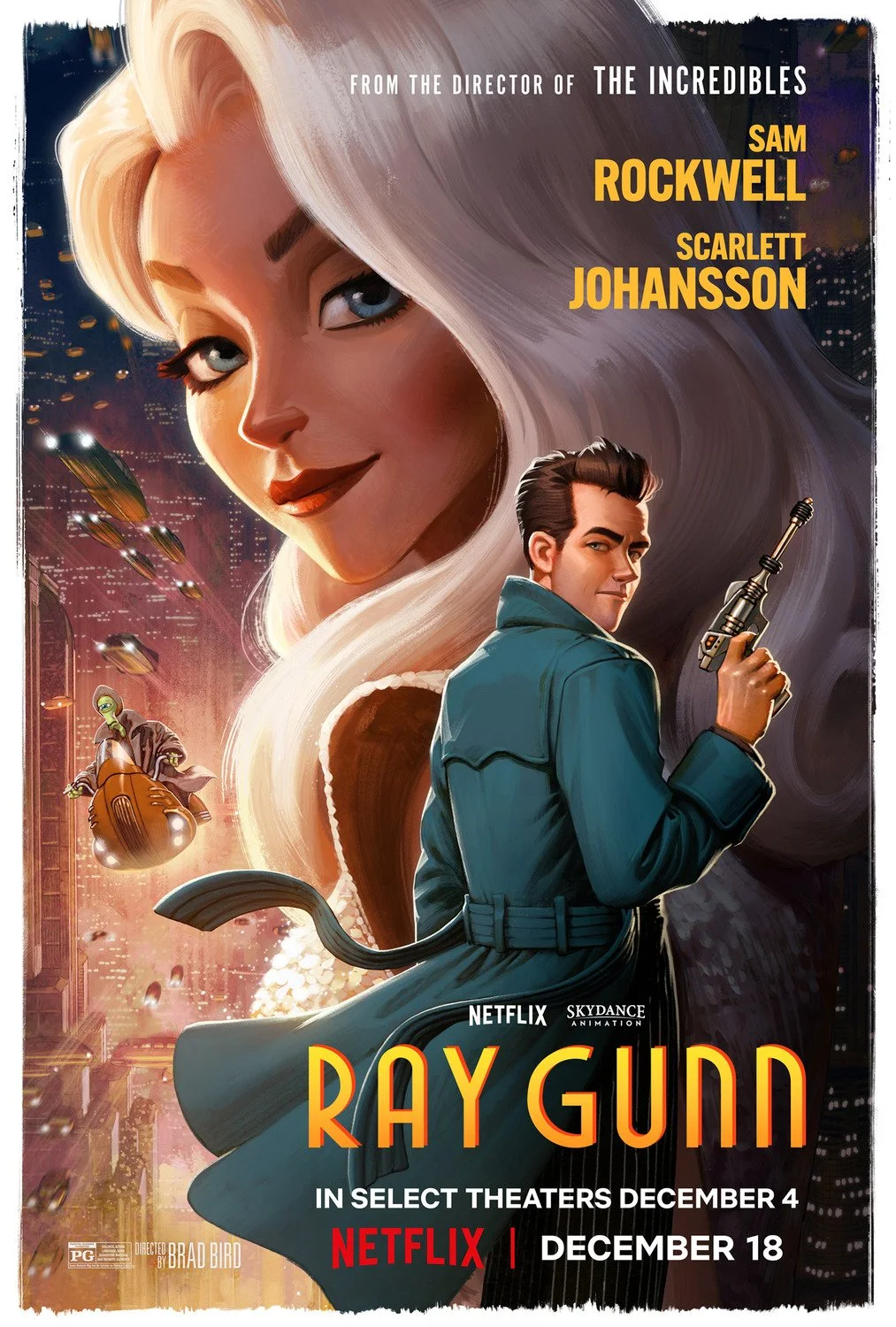
Oscar‑winning animator Brad Bird arrives on Netflix this December with a stunning retrofuturistic, neo‑noir sci‑fi mystery that will captivate adults and kids alike. Ray Gunn unfolds in an alternate 1939 in the fictional city of Metropia, where humans and aliens coexist in segregated societies. The film weaves in lessons about racism and xenophobia while championing compassion and cultural acceptance. The big reveal isn’t especially difficult to predict, but the film’s mission to deliver spectacular entertainment with a touch of social commentary is accomplished with cinematic CGI flair.
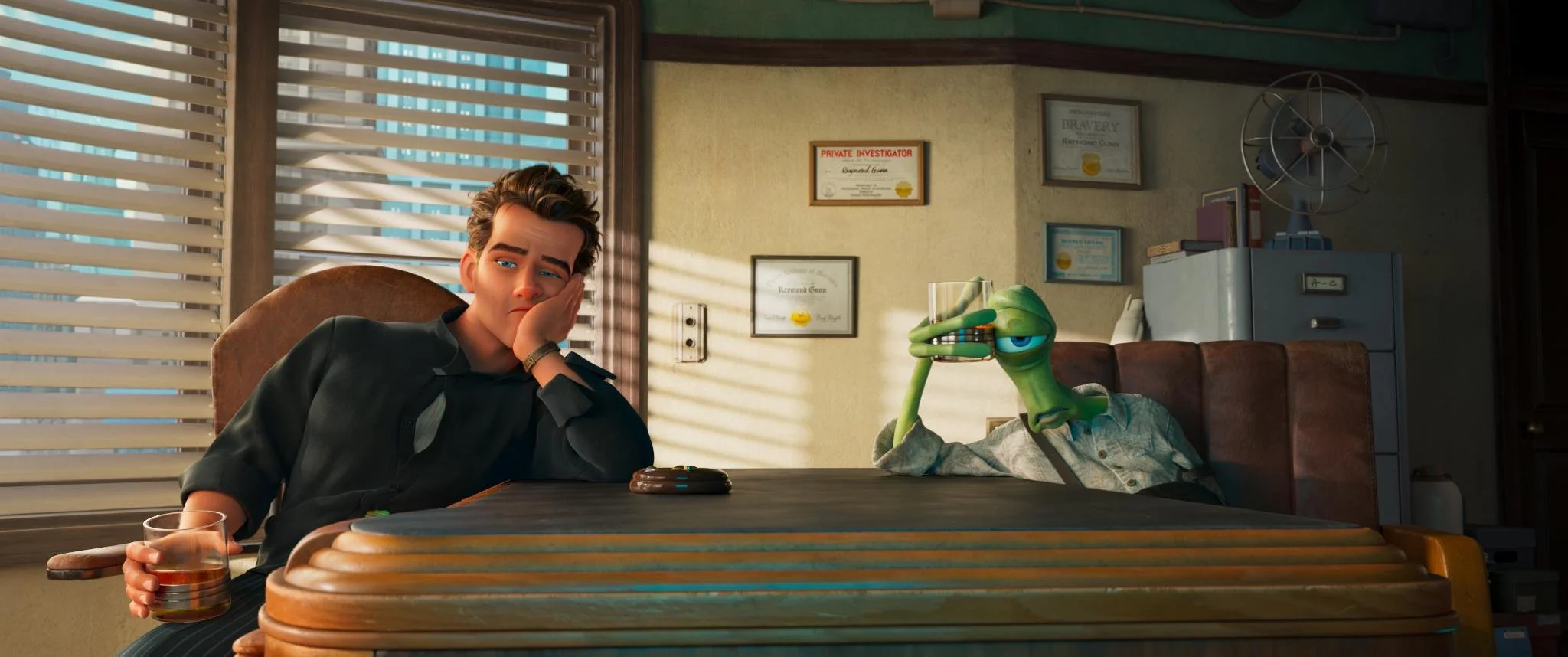
Sam Rockwell voices Ray Gunn, the last human private detective who’s cut from the same classic fedora-wearing cloth as Philip Marlowe and Sam Spade. He’s got an alien sidekick called Eye-Ra (Tom Waits), a spider-like creature with a big eyeball that can take old-fashioned pictures. Ray’s always broke and struggling for money because he’s got a conscience and does the right thing, much to Eye-Ra’s consternation. He also has a good heart but a practical approach to their seedy business. Ethics doesn’t pay bills or put food on the table.
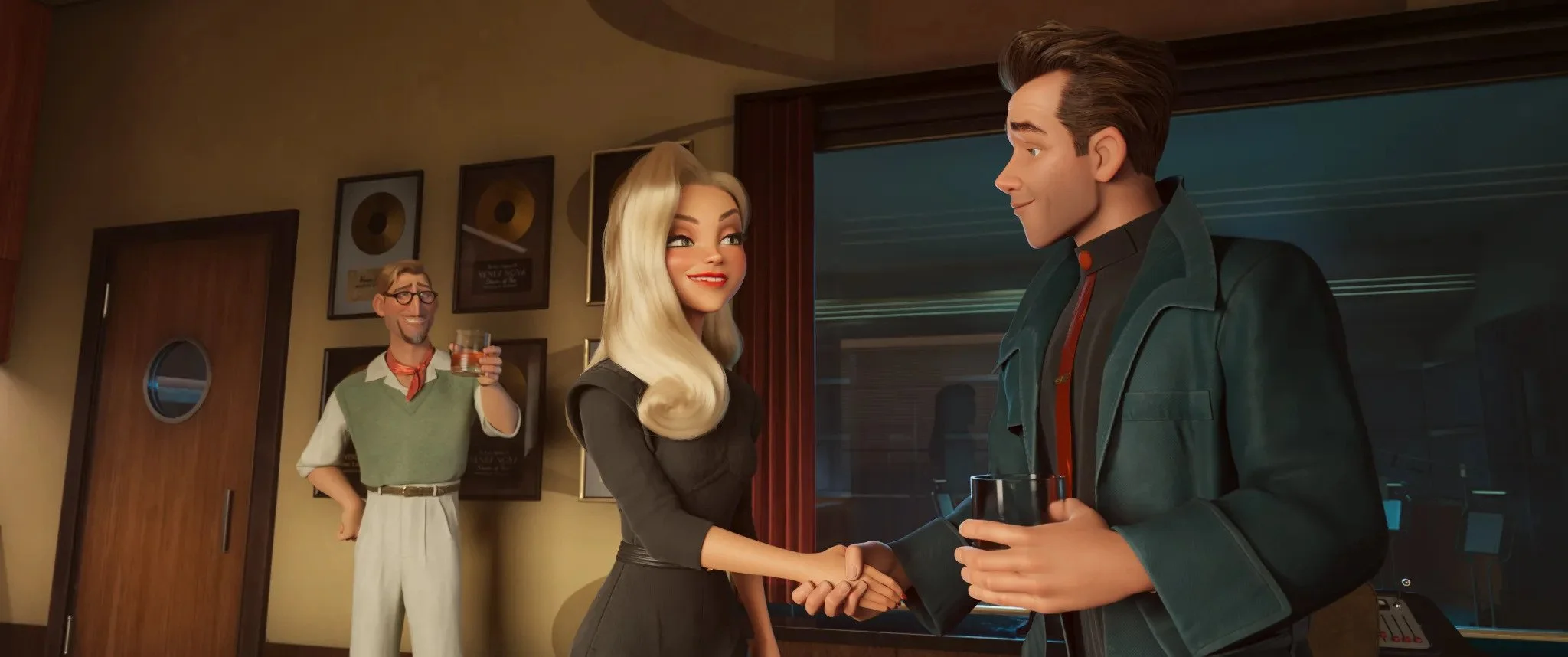
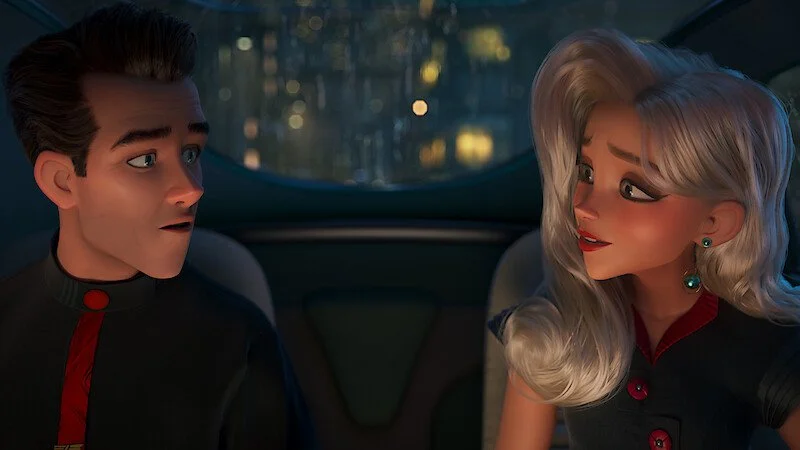
Ray fumes after a job goes south, but is surprised when a huge possible payday lands at their door. Arnold Dom (Bobby Cannavale), the fourth husband of the world’s biggest pop star, the gorgeous blonde Venus Nova (Scarlett Johansson), wants Ray to surveill his wife. Venus is constant tabloid fodder and no stranger to scandal. Her ferocious temper threatens to derail the launch of her highly anticipated new album. But even worse, Arnold thinks Venus is having an affair. What could possibly go wrong with such an easy gig? Those words ring hollow as Ray and Eye-Ra discover a conspiracy that will shake the foundations of Metropia.
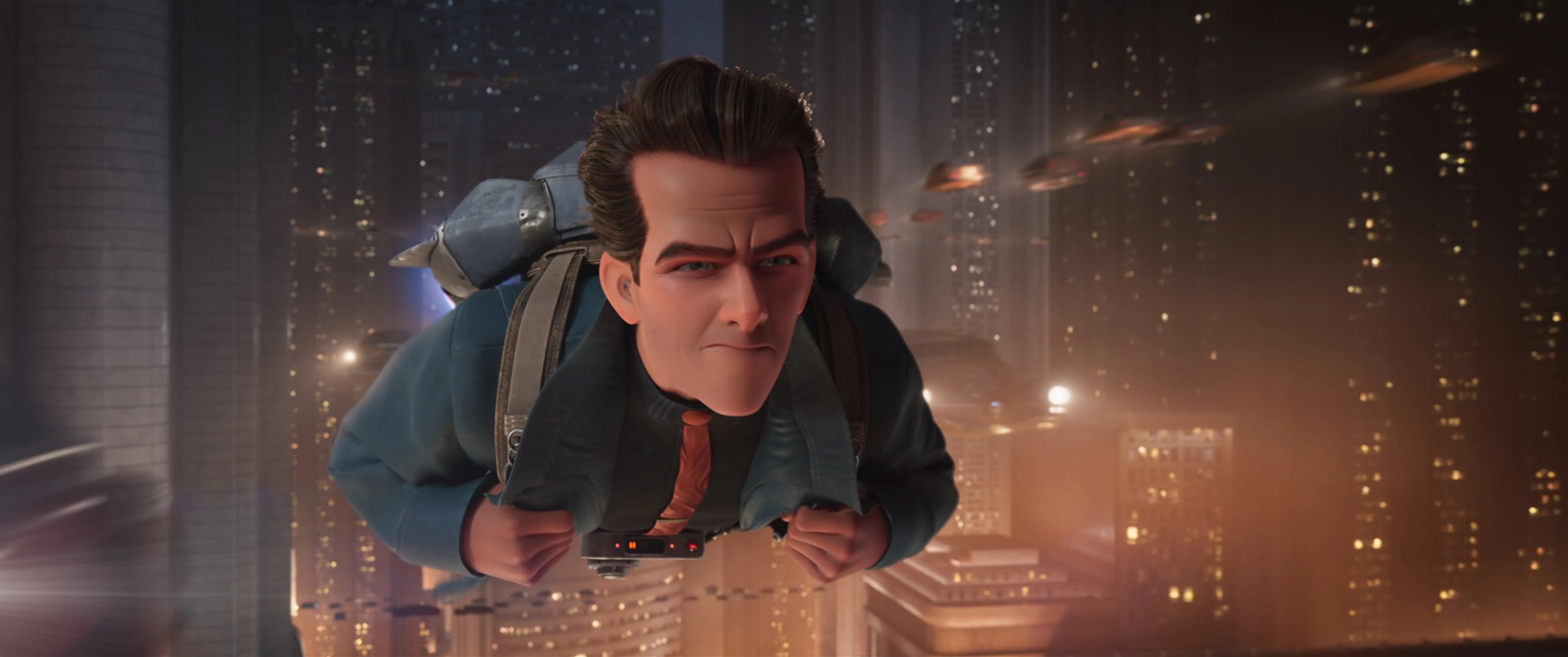
Ray Gunn looks phenomenal and will be a major animation contender this awards season. Bird, truly one of the greatest modern filmmakers (The Iron Giant, The Incredibles, Ratatouille), immerses the audience into a bustling city with epic scale. Metropia’s buildings are hundreds of stories tall with magnificent rooftop settings. Flying cars whizz by at breakneck speed with regular commuters sharing the sky on rentable jetpacks. The scope of every scene is a wonder to behold with multiple things happening in frame. Bird makes the center focus easy to discern, but there are amazing background interactions throughout.
Conversely, a wealth gap exists between those who can afford lofty luxury and the poor, mostly aliens, who reside on the street level. Ray and Eye-Ra, resplendent in nifty ‘30s garb and packing laser pistols, tussle with all manner of gangster thugs in a wonderful nod to the gumshoe noir source material. Bird’s production design is spot on as the banner action heats up with several of the best chase scenes of the year. A child sitting near me in the theater was absolutely dumbstruck in awe. Flying cars swooping around and smashing into buildings with lasers blasting is worth the price of admission by itself.
Let’s tread carefully in discussing the plot, because spoilers will ruin the fun and educational purpose. As previously stated, you don’t have to be Sherlock Holmes to deduce the twists. Bird’s screenplay leaves enough crumbs to build a bakery. It’s obvious where the story’s going, and that’s by design to a certain point. Bird uses the mystery elements and extraordinary production design to depict an ugly concept that most children will have no familiarity with: segregation.
The idea of "Whites Only" water fountains, bathrooms, public transportation, and common areas are anethema to modern values. Ray Gunn’s aliens are the “Colored” citizens forced to live separately from humans. They can’t go to human hospitals when gravely injured because that would be illegal per Metropia’s laws. Aliens are considered second-class even though they are an integral part of the city’s vibrant success. Every kid watching the film will get this message and have an appreciation for the historical sacrifices that allowed equality for all. Bird doesn’t get heavy-handed in showing the fight for civil rights, but expresses in easy to understand terms why discrimination is unjust.
Ray Gunn’s biggest criticism will be its two-hour runtime. There are visual bells and whistles galore, but the narrative does run long once all the secrets are laid bare. The climax should have happened sooner with a more succinct finale. That said, the lastl scene is deeply hopeful and moving with a positive note about being true to yourself. Bird continues to astound and hasn’t lost a step with another fantastic film.
Ray Gunn is a production of Skydance Animation and Cinesite. It will have a limited theatrical release on December 4th. Then a streaming premiere December 18th on Netflix. I highly recommend seeing the film in the best theater possible.