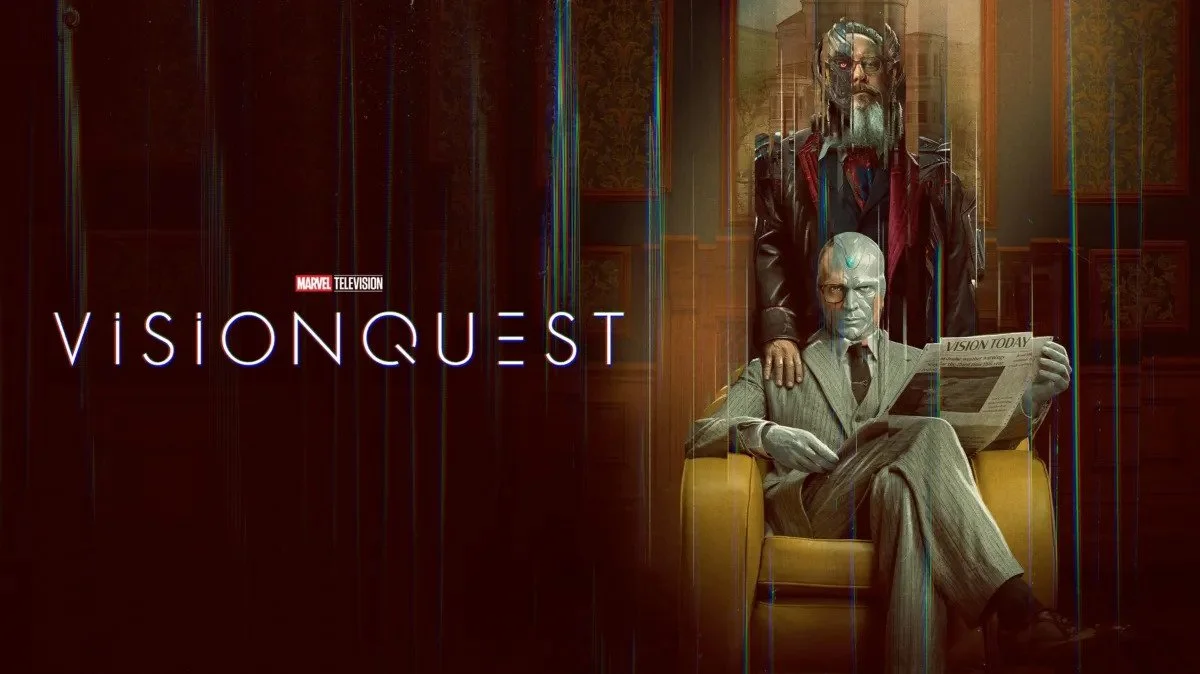
TV Review: VisionQuest
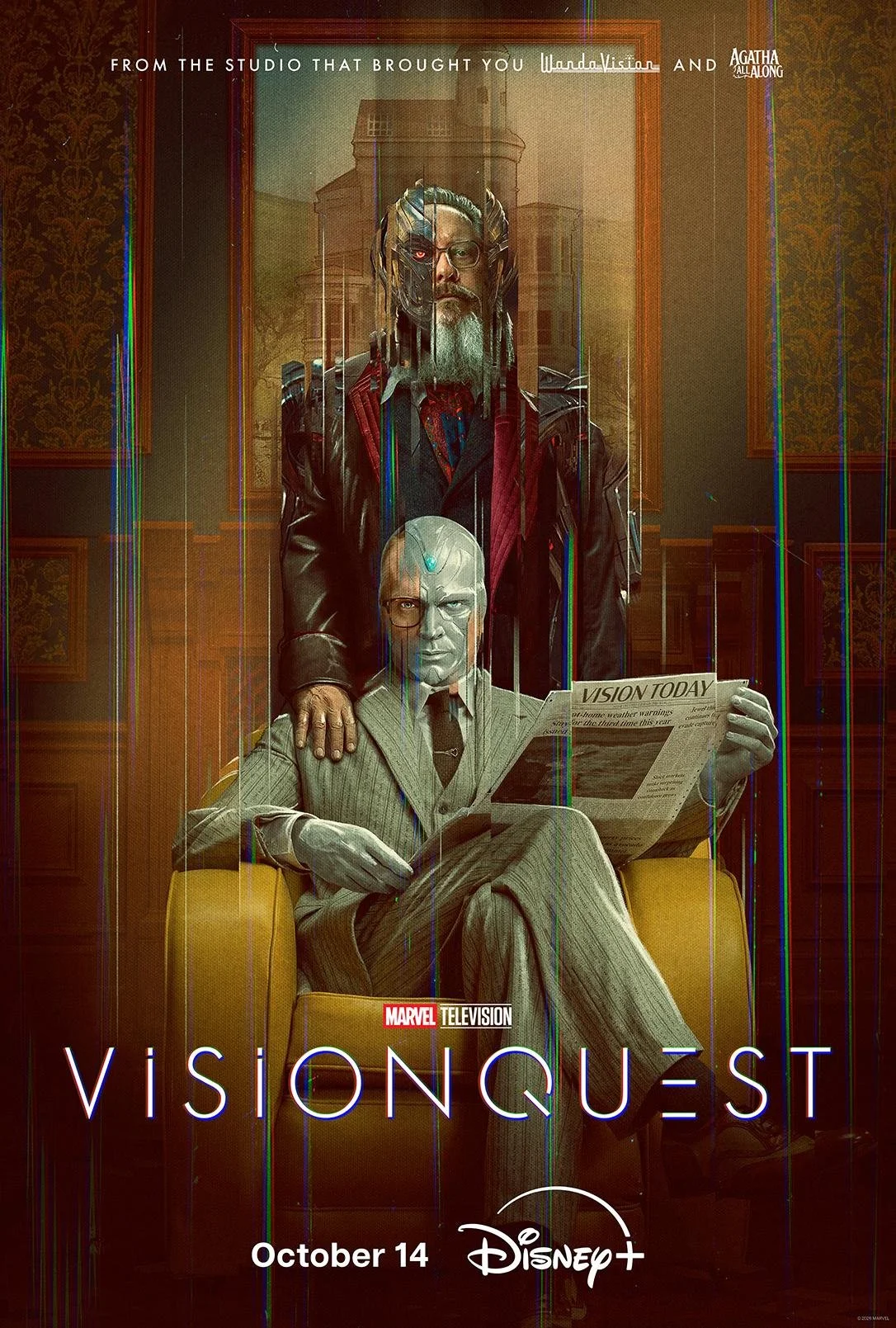
Paul Bettany returns to synthezoid form in VisionQuest, a well-acted but spectacularly convoluted and protracted MCU miniseries that may struggle to find an audience. The direct sequel to WandaVision and the third installment in a narrative that includes Agatha All Along, VisionQuest features a strong supporting ensemble, particularly James Spader, who steals nearly every scene while reprising his role as Ultron, as well as an impressive production design. The problem is that the series drags across its eight episodes, continually introducing confounding twists that distract from its central theme. To say there's a lot going on here would be a vast understatement.
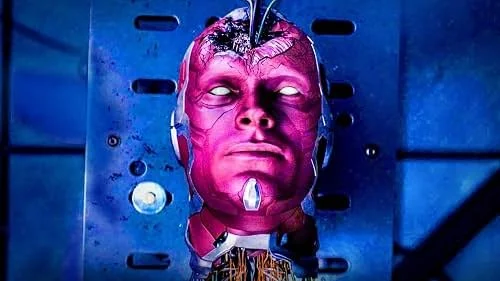
We last saw the ghostly white rebuilt Vision (Bettany) flying away from the suburb of Westview. He was essentially a hollow version of his former self with all the superpowered abilities, but no purpose or real understanding of his predecessor’s values. The story picks up years later with Vision working as a barback in an Edinburgh pub that will be familiar to Avengers fans. Vision politely turns down another invite for dinner with the owner (Fiona Guthrie) before retreating to the cooler in a lockdown mode.
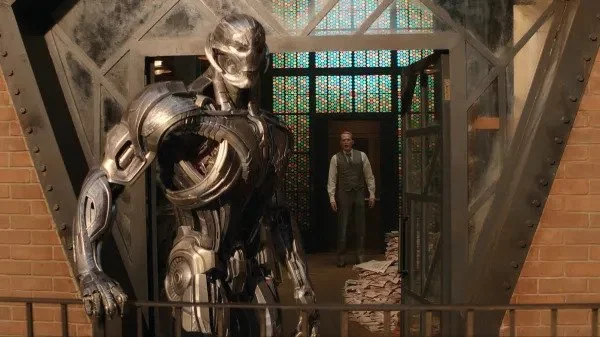
Vision has created a genteel English mansion simulation in his quantum brain. He’s downloaded the Stark Industries AI models to help him find a place amongst humanity. You’ll recognize J.A.R.V.I.S. (James D'Arcy), F.R.I.D.A.Y. (Orla Brady), E.D.I.T.H. (Emily Hampshire), and the still villainous Ultron (Spader), from the MCU films. They are joined by the nearly mute D.U.M.-E (Henry Lewis) and U (Jonathan Sayer), who provide maintenance functions that don’t require reason or intellect. Scenes continually cut back and forth between the real world and the discussions going on in his head.
A deadly threat interrupts his secret exile when the bounty hunter Paladin (Todd Stashwick) discovers his location after a tip from a mysterious handler, who wants Vision alive for an unknown but inferred to be sinister reason. Paladin has several tricks to lure Vision into a trap, but none more effective than a troubled British orphan with psychological problems. Thomas Shepherd (Ruaridh Mollica) is plagued by fleeting memories of a mother, brother, and synthezoid father. But how can this teen be Tommy Maximoff, the son of Vision and Wanda? WandaVision was supposedly just an illusion created by an incredibly powerful witch. Paladin correctly believes that Vision will not run or escape, but protect Tommy if only to discover his true origin.
VisionQuest posits its protagonist as a “Tin Man” of sorts trying to find his heart. Embroiled in similar conflicts are the other AIs who are also sentient and have their own desires. None more so than Ultron, who is supposed to be trapped in Vision’s cranium, but of course, can alter outside world events at his devious whim. He’s still a monstrous threat, but sees Vision as a teachable son and has come to respect certain aspects of humanity. This familial thread is the primary arc as Vision must also reconcile his relationship to Tommy.
VisionQuest goes south when the plot deviates from Vision, Ultron, and Tommy. There’s enough meat on the bone for a deep exploration and character growth without incorporating new subplots. The reveals keep coming as other players join the “Who's Your Daddy” game to the detriment of what’s interesting and successful. This is especially disappointing in the laborious final two episodes that are overblown and nearly nonsensical. They can’t be discussed without treading into spoiler territory, but the series should have concluded after the sixth episode. What happens after is just a bridge too far that dilutes the show’s best tenets.
Vision’s mind maze and the AI hijinks within are creatively done. The filmmakers juxtapose Matrix-esque digital cinematography with practical sets and objects that also signify the same things. For example, Vision’s power source is represented as an old school boiler while the AIs can also transform into code and leap into light streams to hack other devices. The same artistic aesthetic that made WandaVision so intriguing is more stylized and detailed here. Showrunner Terry Matalas (12 Monkeys, Star Trek: Picard) deserves credit for every episode looking phenomenal. If only he’d used that same focus on truncating the storyline when it becomes too bloated.
The action scenes suffice with moments of gory violence that does add an unexpected shock value. But don’t expect nonstop thrills as the series is cerebral to its core as both a positive and negative. Ultron manipulating Vision through Spader’s masterful acting is amazing. Watching other characters attempt to do the same and not come remotely close lands with a thud. I’ll state again that entire subplots should have been cut. They’re a total drag when you’ve got Spader and Bettany on a roll.
The question remains if MCU fans and general viewers care enough about Vision and the characters in his orbit. The AI mumbo jumbo devolves into a chore, but Bettany and Spader have journeys worth watching. Whether that’s enough to keep eyeballs glued to screens over the entire season is hard to judge.
VisionQuest is a Marvel Television production. The first two episodes premiere October 14th exclusively on Disney+.