Film Review: The Social Reckoning
The Social Reckoning excoriates Facebook and its apathetic CEO Mark Zuckerberg in a blistering drama that doesn’t quite live up to its masterful predecessor. Aaron Sorkin won the Best Adapted Screenplay Oscar for The Social Network, and while his dialogue continues to be spellbinding, he’s not nearly in the same directing league as David Fincher. That said, Sorkin, and a sharp lead performance from Mikey Madison, achieve the goal of depicting Zuckerberg as a bloodless capitalist willing to sacrifice lives, truth, and democracy to fatten his billionaire status. His callous indifference and vile orchestration of addictive personal media is truly worthy of this barbed depiction.
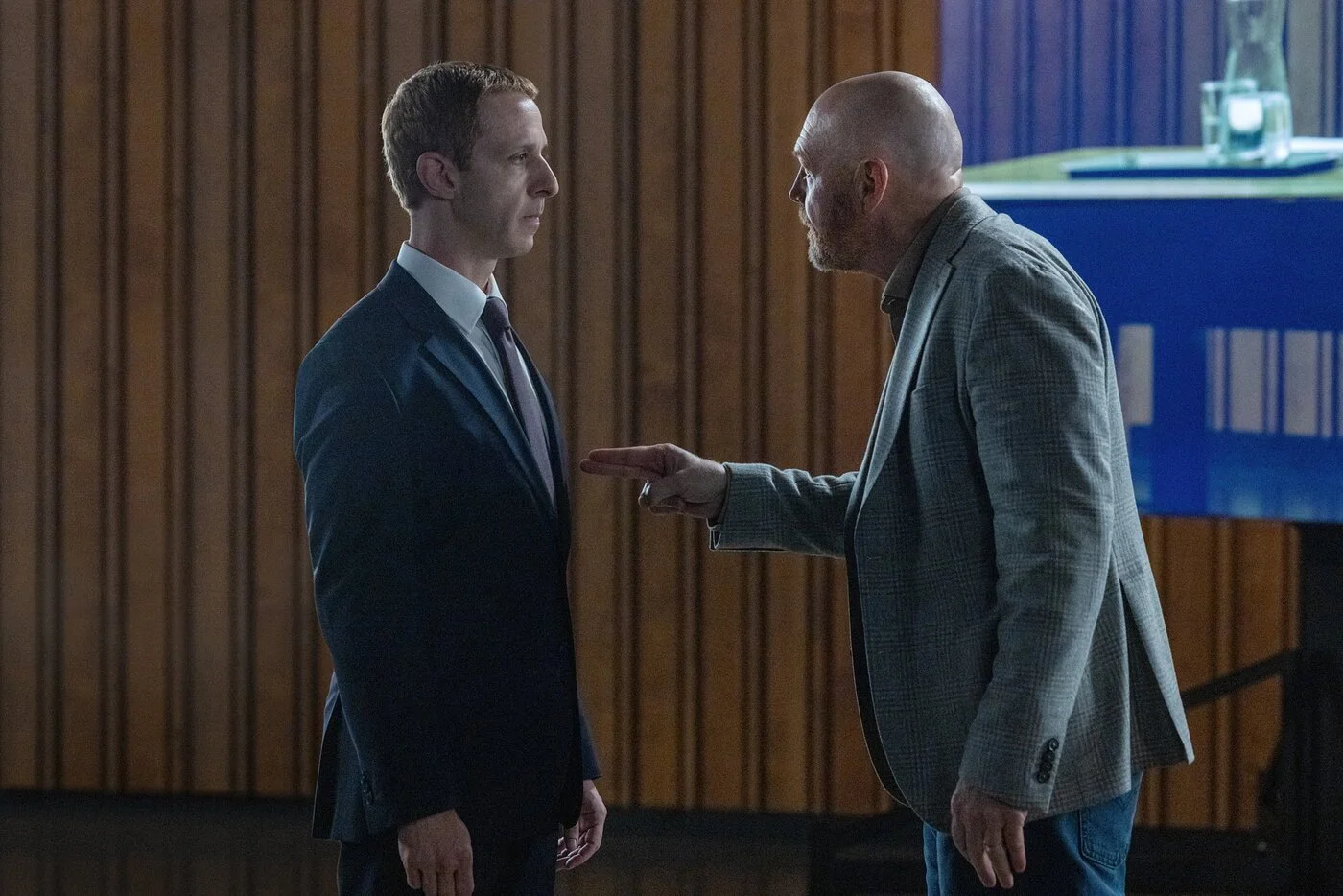
The Social Reckoning adapts the true story of Wall Street Journal reporter Jeff Horwitz and former Facebook data scientist Frances Haugen. It is told in chapters over several years with a flashback structure that provides critical exposition to ugly reveals. The film avoids being submarine warfare by staging tense interpersonal moments with the similar dramatic flair of Sorkin’s A Few Good Men. The ensemble gets up close and heated as fiery tempers bring the narrative to a steady boil. These scenes are absolutely gripping in the first two acts, but loses steam as Sorkin goes all out for a blockbuster climax.
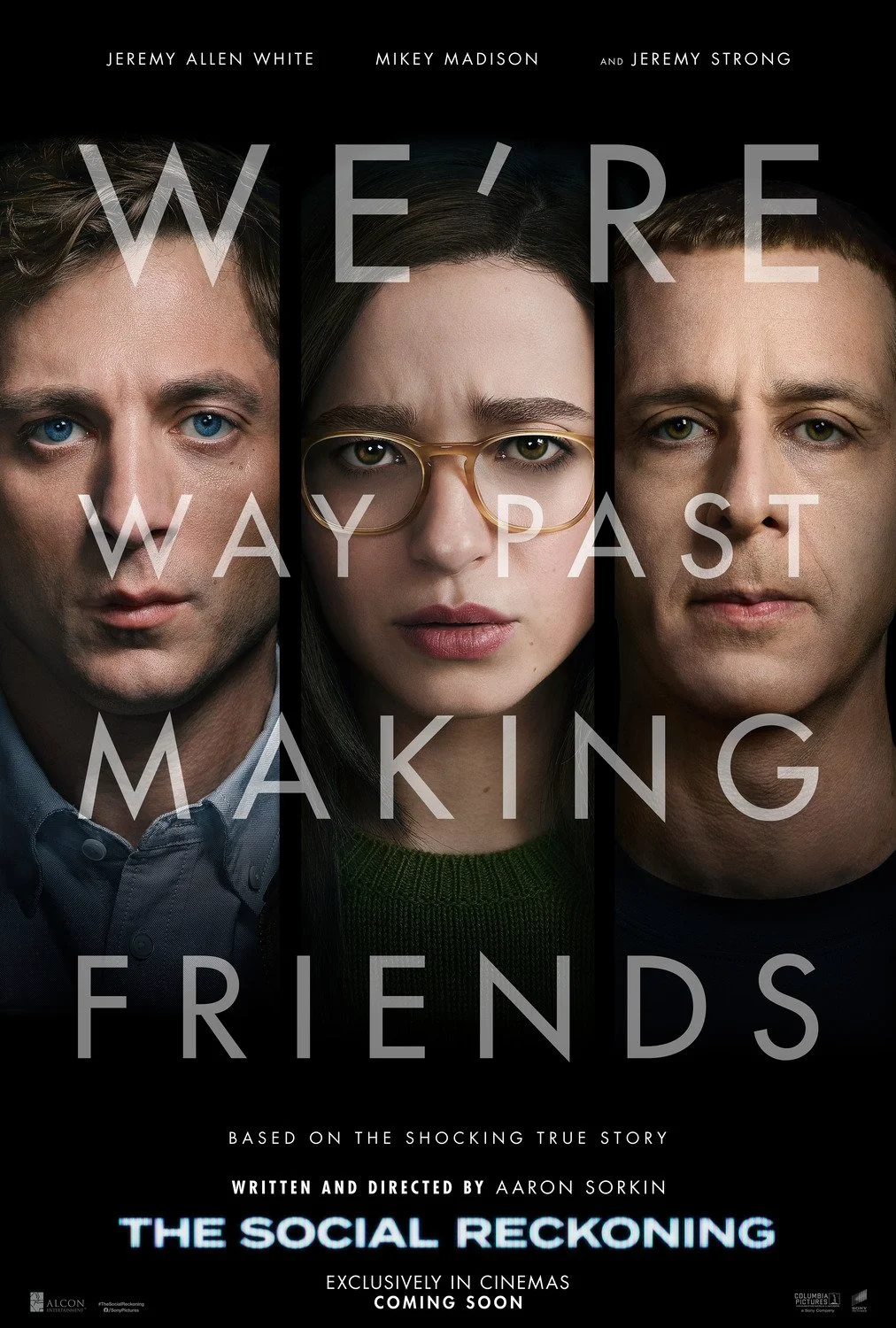
The plot begins in 2019 San Francisco with the Wall Street Journal hiring Horwitz (Jeremy Allen White) as its new investigative tech reporter. Horwitz is mocked as a luddite who despises modern technology and doesn’t use social media. But he’s a gifted writer with a knack for getting big scoops and informants. His presence immediately rings alarms at Facebook’s nearby headquarters where the company’s head publicist (Billy Magnussen) warns employees to be wary of his outreach. They knew Horwitz was digging and took steps to thwart him.
Meanwhile, a disturbing viral Facebook post has stoked unease with Haugen (Madison), a dedicated employee and believer in the company’s mission of connecting people. The brilliant Haugen had few friends, was socially awkward, and wore hand and leg warmers because of a health affliction. Haugen worked in Facebook’s Civic Integrity Unit where she was responsible for flagging dangerous trends. Haugen realizes that Facebook users were getting radicalized to extremist viewpoints the more they used the platform. Haugen’s efforts to warn her superiors were coldly rebuffed. She was just a weird girl who needed to date more.
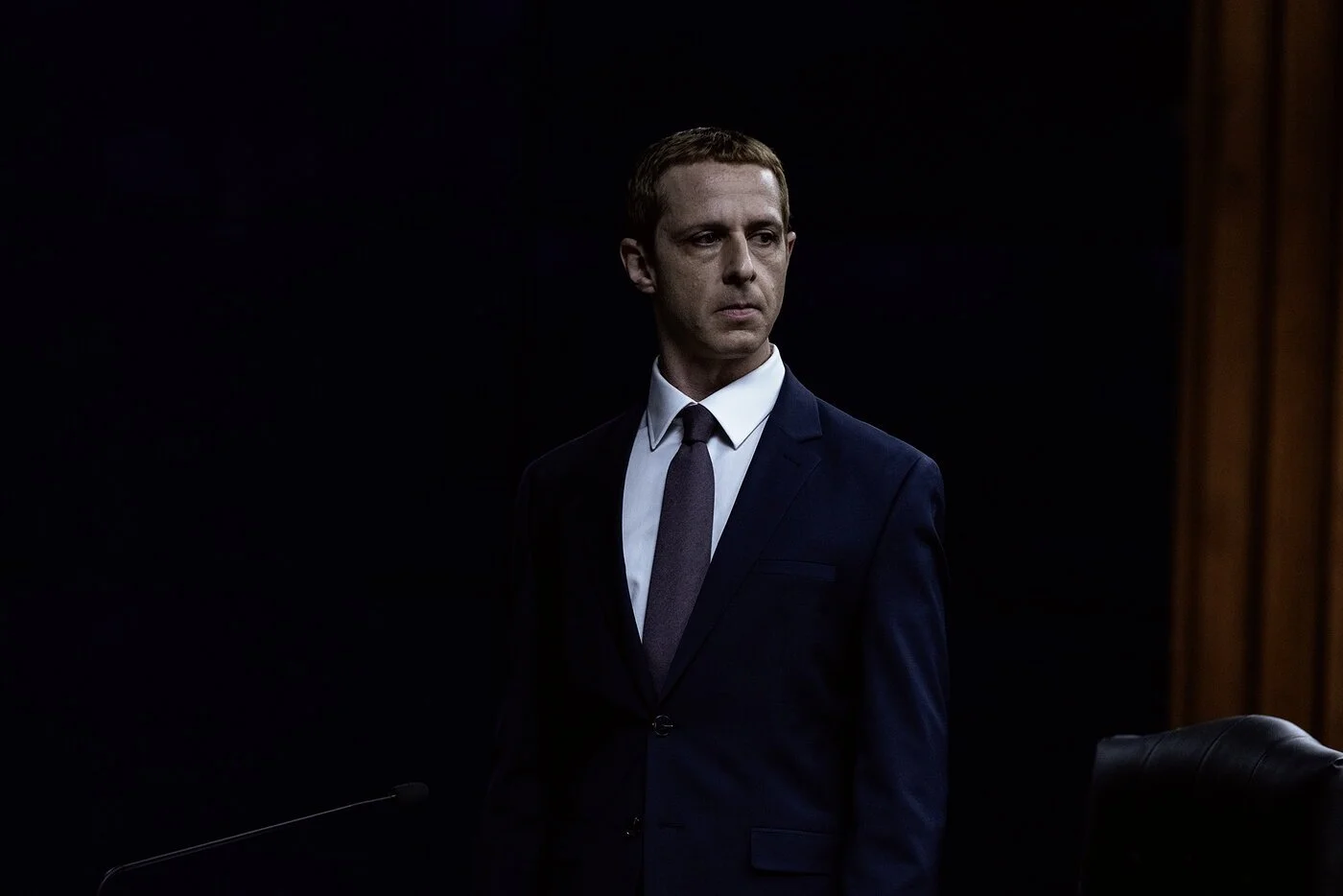
Several years later in 2021, Zuckerberg (Jeremy Strong) prepares for an important hearing before Congress. His lead counsel (Wunmi Mosaku) and a former ally-turned-critic (Bill Burr) are present to help Zuckerberg look “warm and compassionate.” Their arguing about the color of his ties and Facebook’s responsibility for vetting political ads is interrupted. Horwitz and the Wall Street Journal are about to release a series of bombshell exposés on Facebook. And he wants to get Zuckerberg’s response on the record.
Sorkin nails the first act with a conflicted protagonist and her archetypal enabler. Haugen is deeply concerned by Facebook’s actions. No one wants to listen to her, and even worse, everyone is complicit in stoking division for profit. Zuckerberg’s limitless greed and lack of empathy has become company policy. Haugen’s torn because Facebook was a place she loved and supported, but can no longer remain quiet. She’s terrified of what will happen if she’s found leaking secrets. Horwitz is cut from the same cloth as Woodward and Bernstein, a good man in search of answers. Facebook had become a dominant presence in the lives of billions. But its impact was obviously negative, and the company must be aware of the discord they were causing. Haugen reluctantly becomes Horwitz’s mole and uncovers dark corporate secrets that confirms their worst suspicions.
The audience genuinely cares for Haugen as she struggles to come to terms with her choices. She knows that her life and career will be destroyed once outed. Madison, in her first role after winning the Best Actress Oscar for Anora, is in top form as a nervous young woman finding the fortitude to do the right thing. Her scenes with White are mesmerizing with an almost intimate tinge. They become an unlikely duo on the same mission to tame a monster, but have their efforts come too late?
Strong skewers Zuckerberg with a rigid countenance and soulless eyes under his trademark Caesar bangs. Zuckerberg is the unredeemable villain who holds himself and Facebook as not responsible or complicit in any wrongdoing. They were just the “public square” that enabled “free speech.” It wasn’t his duty to censor false and inflammatory information, but he understood that feeding humanity’s worst instincts was key to people remaining on the platform. Cyberbullying, teenage suicides, and the explosive rise of grossly misled anti-vaxxers during the pandemic were just expendable collateral damage. Zuckerberg doesn’t get a drop of decency or denial because he doesn't deserve it.
The Social Reckoning has you hooked until an underwhelming climax. Haugen and Horwitz light a fire that’s quickly doused by Facebook’s, now Meta, staggering resources. Sorkin never mentions Trump by name, but does show the consequences of rampant disinformation. It’s a hollow victory that honestly lacks the cinematic and artistic qualities of The Social Network, but is still a must-see follow up to the destruction that Zuckerberg and his ilk continue to inflict.
The Social Reckoning is a production of Columbia Pictures, Alcon Entertainment, The Gotham Group, and Escape Artists. It will be released theatrically on October 9th by Sony Pictures.